
Sunrise Hope Center Good Neighbor Agreement
Minor edits may be made closer to the program opening.
Program Overview
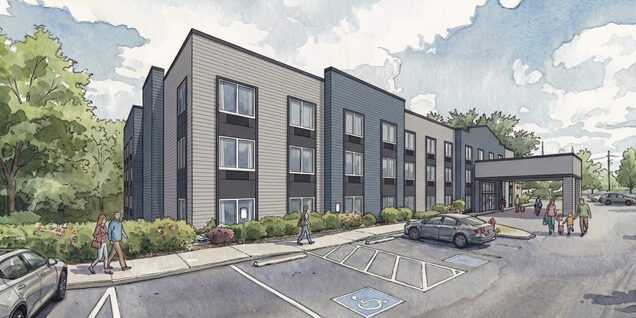
Transitional housing serves as a steppingstone for individuals experiencing homelessness or housing instability, offering robust on-site services, 24/7 staffing, and security, with the goal of helping residents transition to stable, long-term housing within two years. Hence, our efforts include the upcoming transitional housing at a former hotel in unincorporated Washington County, located on Cornell Road.
Sunrise Hope Center will be a recovery-focused transitional housing program for 75-85 participants, who will be supported in a clean and sober living environment while working towards long-term, stable housing. Individuals residing in recovery housing must maintain sobriety as they work toward achieving housing stability.
Ownership of this site, located at 15402 NW Cornell Rd, officially transferred to Washington County on March 10, 2025. This site was purchased in part because of the opportunity to quickly add transitional housing capacity by remodeling the existing hotel; however, renovations will be required over the next year.
Community Engagement & Timeline
Washington County staff will engage with the neighborhood, advisory bodies, and other community partners prior to the site's opening. Community engagement will include an opportunity to meet on-site service providers, tour the site, ask questions, and share input on how best to engage with neighbors in the future. This process will also include the development of a Good Neighbor Agreement (GNA) to be jointly created by the neighbors and the program operator.
Neighborhood meetings
Bi-monthly workshop with partners, law enforcement, and neighbors to create a GNA:
Past Meetings:
- August 18, 2026
Bethany Library Annex - June 17, 2026
Lenox Elementary School Gymnasium - March 31, 2026
Oak Hills Elementary School Gymnasium - January 15, 2026
Oak Hills Community Room - December 17, 2025
Cedar Mill Library - October 14, 2025
Virtual via Zoom - Recording
Project Timeline
- County purchased property (Early 2026)
- CPO Meeting (Late 2025)
- Helping Hands Meet and Greet, (Late 2025)
- Early - Mid 2026: Renovations and Good Neighbor Agreement (GNA) process underway
- Good Neighbor Agreement meeting #1
- Good Neighbor Agreement meeting #2, site safety & design
- Good Neighbor Agreement meeting #3, safety & program participation
- Review updated Good Neighbor Agreement
- Late 2026: Neighbors notified of final GNA.
- Early - Mid 2027:
- Transitional Housing Tour
- Programming Begins
- Mid - Late 2027: After program opens: Feedback collected from neighbors and encouraged from day one
- 6-Month Check-In
NOTE: This timeline is subject to change based on labor and funding constraints.
For additional questions or to be added to the interested parties list, please contact [email protected].
Looking for a full version and physical copy of the FAQs?
FAQs
When we choose homeless services facility locations, we look at many factors to make sure they work well for the people who will live there and for the surrounding neighborhood. Washington County applies Board-approved Siting Guidelines when determining location of homeless facilities.
We looked at the location in relation to existing services in Washington County, the potential community impact and consider how close it is to public transportation, grocery stores, and job opportunities, things that will help program participants be successful. Other considerations include property size and location, geographic distribution of homeless services facilities, and the condition of the building.
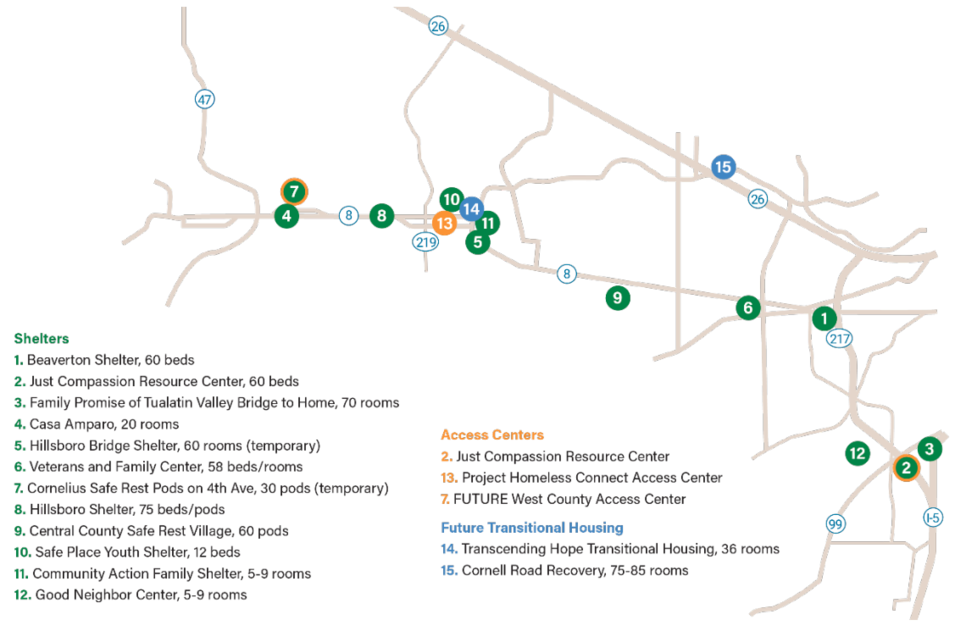
Here is a map of existing and planned homeless services facilities.
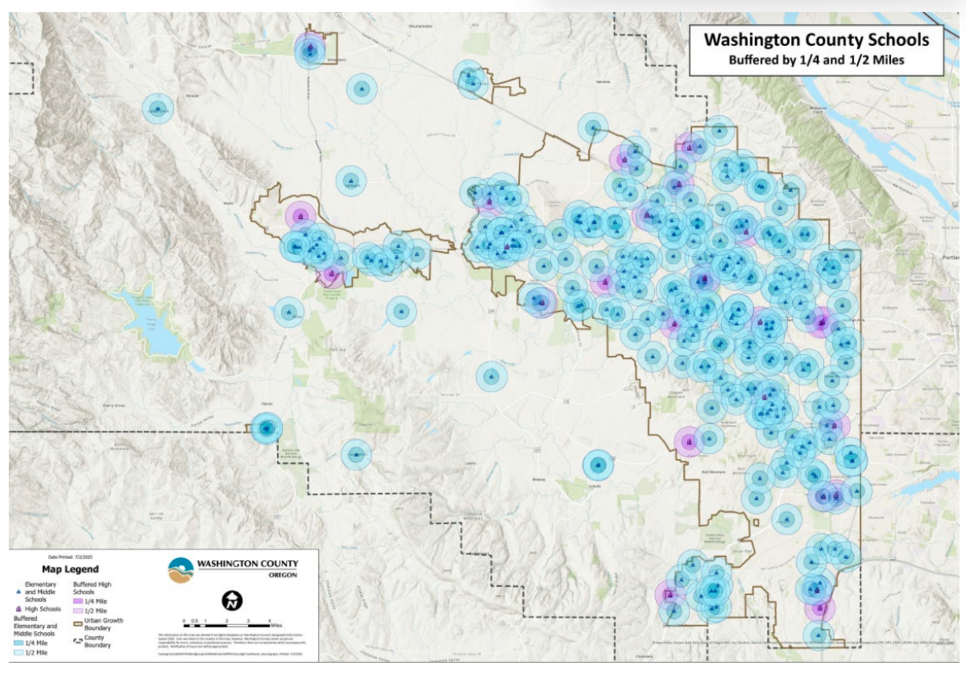
Washington County is home to many schools, which means most potential shelter or transitional housing sites will likely be near one (see map of schools in Washington County below). When choosing locations, we follow shelter siting guidelines and look for availability along with access to public transportation, grocery stores, and job opportunities, resources that help shelter residents succeed, all while staying within our limited budget.
While there are no state rules about how close shelters can be to schools, we carefully consider the impact on the surrounding community, including schools, playgrounds, traffic and parks. We also communicate directly with local school districts and invite them to be part of the engagement process.
We are committed to safety and transparency, and we will work closely with schools and neighbors to ensure shelters are a well-maintained, positive addition to the community.
Related

Current Projects
