
Posted
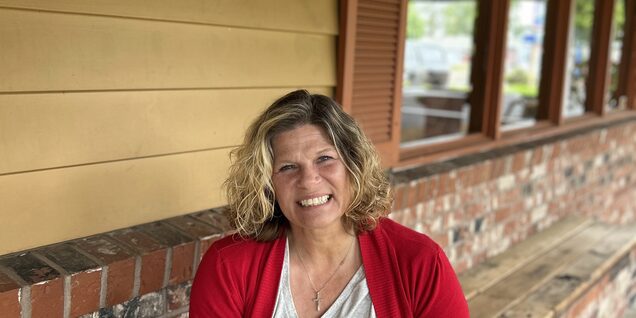
Prior to her stay at the Just Compassion Shelter, Erica struggled with alcoholism for 20+ years and endured domestic violence for over a decade.
“I wanted out a long time ago, but I didn’t know where to go for help,” she shared. Little did she know, she would be working at the same shelter where she first slept in an emergency bed in January 2024.
Her abusive partner wanted her to quit her job and become further isolated, but Erica insisted on maintaining her job as a waitress. It was then that he threw her out of the car, by sheer coincidence, in front of Just Compassion’s doors.
Leaving an abusive relationship required her to leave all of her belongings and much of her old life behind. At the time, she felt like she had hit rock bottom and could not imagine the new heights she was aiming towards.
Erica first enrolled in the shelter, where she worked with a housing liaison. During that time, she had also become more deeply connected to her faith.
Over the next five weeks, she used the resource center computer to complete her Oregon Food Handlers Card certification and apply for new jobs. Once she landed one, she found black pants and shoes in the free clothing closet on-site and commuted thanks to bus passes provided by the resource center.
Erica made the best use of this time. She attended NAMI (National Alliance on Mental Illness) support groups and worked with a counselor from Sequoia Mental Health Services before completing an Intensive Outpatient Program to treat her substance use disorder.
As Erica moved through her recovery journey, she then stayed at the Oxford House, a leading example of recovery-supportive housing. Throughout this experience, Erica knew she wanted to give back and volunteer once she reached stability.
Erica also participated in the 2024 Department of Housing Services listening session, advocating for the importance of recovery-focused homeless services programs. As someone with lived experience, her voice was crucial to sharing the challenges and needs of people navigating housing instability.
Her call for more recovery-focused programs is resulting in action, as the Department of Housing Services works to open a new recovery transitional housing facility.
Every step on her journey prepared Erica to live independently. She saved money during this time to prepare for living in her own apartment. Thanks to a generous anonymous donation of $500, Erica was able to save the $1,100 needed to cover the security deposit for her very own apartment. Once Erica was stably housed, she turned her attention to volunteering at both Just Compassion and NAMI.
Today, she works the graveyard shift at Just Compassion. NAMI also sponsored her peer support certification, allowing her to lead five support groups.
“I work 80 hours a week, some paid and some volunteer time, and I love it! I’m told I’ll get burned out, but it is empowering to help other people,” said Erica.
Since moving into her own apartment, she has reconnected with family, including her children, and purchased a vehicle to make her commute shorter and easier between jobs.
Erica brings her lived experience to both roles. For instance, she remembered missing feeling like a person in a shelter, and brought an assortment of perfumes and lotions for shelter guests as a pick-me-up. She describes how even the little things can make a big difference to someone who has lost everything, restoring their sense of dignity and humanity.
“I understand that stuckness. I was there for months,” Erica said. “When we don’t judge people and walk alongside them, it has a snowball effect that changes their whole life. I know because it changed my life.”
The Just Compassion Resource Center combines shelter and access center services in one location and is part of the 385 shelter beds funded by the game-changing regional Supportive Housing Services measure. Last year, over 700 people transitioned directly from shelter to stable housing!